3-Day Itinerary: Urumqi-Qitai-Turpan
Discover Xinjiang’s diverse landscapes and history on this 3-day tour from Urumqi to Turpan. Start with UNESCO’s Heavenly Lake, a glacial alpine lake at 1,910m, then explore Qitai’s Petrified Wood-Dinosaur Geopark and ancient wine cellars. Day 2 takes you to Jiangbulak’s 200,000-mu wheat fields and Kumtag Desert, where golden dunes meet urban oases. End with Turpan’s iconic Flame Mountain (47.8°C summer highs), Tuyugou Canyon’s red cliffs, and Bezeklik Caves’ 1,500-year-old Buddhist murals. Ideal for nature lovers and history buffs, this route blends Tian Shan scenery, desert adventures, and Silk Road heritage. Accessible via Urumqi’s Diwopu Airport or Turpan’s transportation hubs.
Included with every escorted tour
Day 1: Urumqi
Heavenly Lake – Qitai County
Breakfast
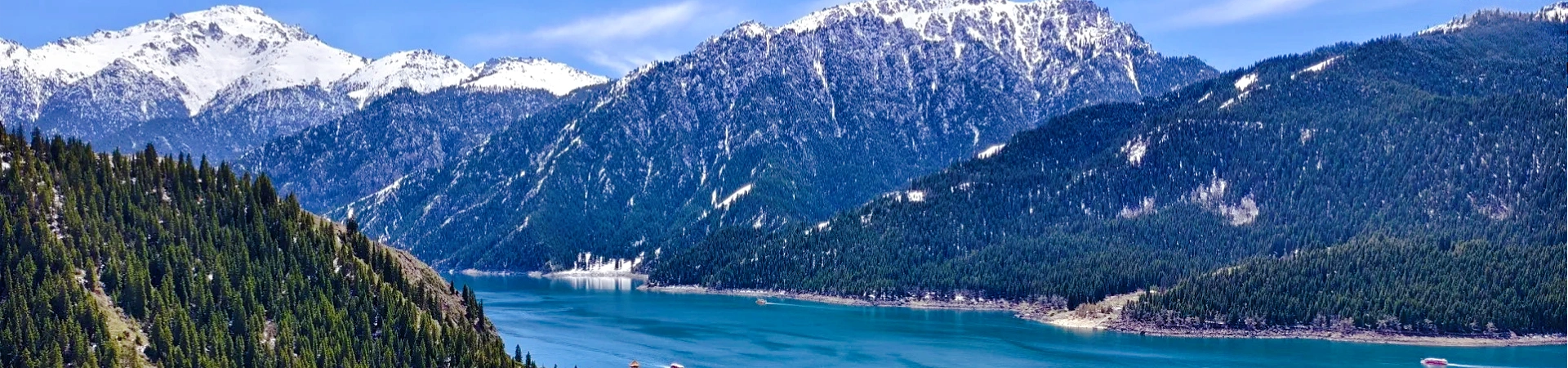
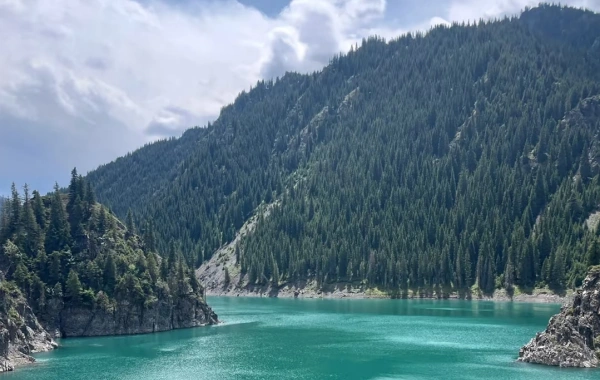
Drive to Heavenly Lake, a UNESCO World Heritage Site nestled at the northern foot of Bogda Peak in the Eastern Tianshan Mountains. At an altitude of 1,910 meters, this natural alpine lake features crystal-clear blue waters surrounded by snow-capped peaks. In summer, it offers cool retreats, while winter transforms it into a natural ice rink.
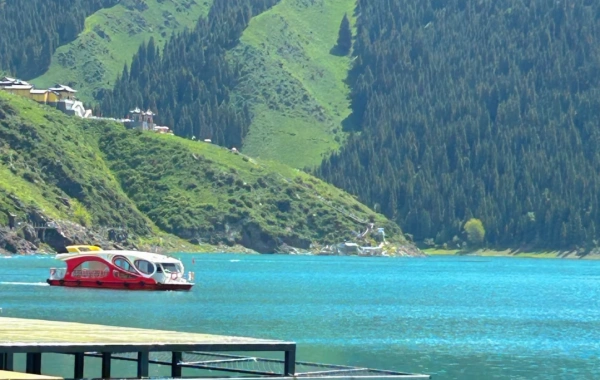
Take the scenic shuttle bus to explore landmarks like Shimen Yixian (One-Line Stone Gate) and Longtan Biyue (Jade Moon over Dragon Pond). Upon arrival at the lakeshore, opt for a paid boat tour or stroll along the shore to admire mountain views, snow-capped peaks, and forest landscapes.
Notes:
Altitude Alert: Due to high altitude, dress warmly, apply sunscreen, and avoid strenuous exercise.
Eco-Protection: Preserve the environment; no littering.
Weather: Mountain weather is changeable—bring rain gear and warm clothing.
After lunch, drive to Qitai County and check in at the hotel. Free time to explore.
Recommended Itinerary:
Petrified Wood-Dinosaur National Geopark
Famous for its concentrated, massive, and well-preserved petrified wood—one of the world’s most spectacular petrified wood clusters. The same strata also yield abundant dinosaur fossils.
Qitai County Museum
Founded in 1993, located at Lihuajian (a commercial landmark). Its Ming-Qing-style architecture houses exhibits in four sections: “Hometown of Dinosaurs,” “Han-Tang Silk Road,” “Trading Hub,” and “Flourishing Era.”
Xinjiang First Cellar Ancient City Wine Culture Museum
The birthplace of Xinjiang’s liquor industry with a 600+ year brewing history, honored as “Xinjiang’s First Cellar • Chinese Time-honored Brand.”
Transportation & Tips:
Scenic shuttle buses at Heavenly Lake are included; boat tours are extra.
Qitai’s museums offer free entry (ID required); guided tours available for a fee.
Day 2: Urumqi
Jiangbulak – Mushi Highway – Kumtag Desert – Shanshan County
4-Stars Hotel
Breakfast
After breakfast, drive to Jiangbulak, boasting 2,000+ years of agricultural history since the Han Dynasty. The area features 200,000 mu of wheat fields, where golden crops undulate like waves in autumn, creating a “living canvas” of seasonal colors. Don’t miss Jiangbulak Grand Canyon—a 15-km winding gorge with crisscrossed birch and maple forests, whose hues shift with sunlight and seasons.
Travel through Mushi Highway to Kumtag Desert, a rare “urban desert” where golden dunes border lush oases. Renowned for its complete sand dune formations—including crescent ridges, linear dunes, and unique feather-shaped dunes—it’s a living example of successful desert control (“Oases never retreat, sands never advance”).
Optional Desert Activities (paid separately):
Handmade nang bread baking in traditional ovens
Camel rides across sand dunes
UTV off-roading and sand surfing experiences
Drive to Shanshan County in Turpan and check in for the night.
Notes:
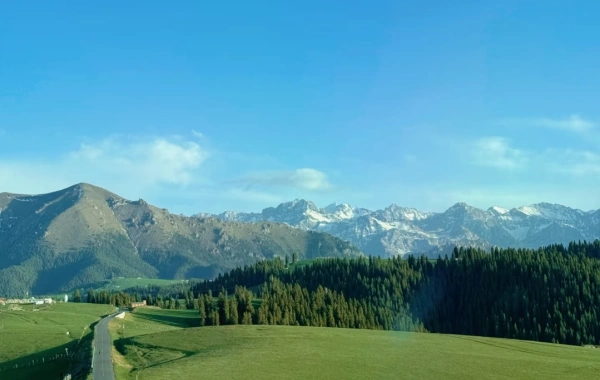
Mushi Highway offers scenic views of Tianshan’s transition from grasslands to desert.
Desert activities are weather-dependent; wear sun protection and comfortable footwear.
Day 3: Turpan
Flaming Mountain (Scenic Drive) – Tuyugou Grand Canyon – Bezeklik Thousand Buddha Caves
Breakfast
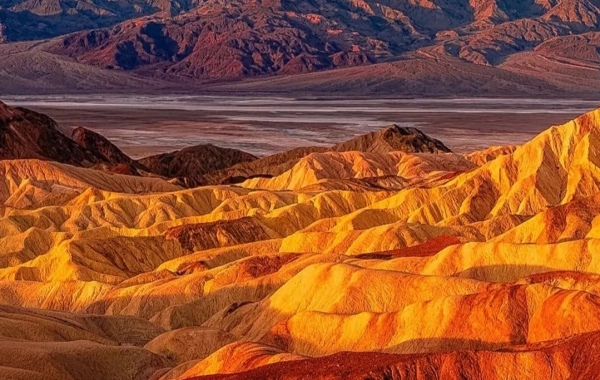
After breakfast, drive along Flaming Mountain Grand Canyon to Tuyugou. Flaming Mountain, China’s hottest place, sees summer temperatures peak at 47.8°C, with sun-exposed surfaces reaching 82.3°C—hot enough to cook eggs in the sand. Named for its scorching climate and rust-red sandstone that glows like fire under desert sun, it’s one of Turpan’s most iconic landmarks. Its unique landscape, coupled with its role in Journey to the West (where Tang Sanzang’s pilgrimage is blocked here and Sun Wukong borrows the Banana Fan thrice), links it to legendary figures like Tang Monk, Sun Wukong, Princess Iron Fan, and the Bull Demon King, enhancing its mythical allure. Visitors can see “Tang Monk’s Horse-Tying Stake”—a sky-reaching rock in Shengjinkou—along with a flat slope said to be his mounting stone, and “Pig Bajie Rock”—a peak resembling a long-snouted pig across the canyon.
Tuyugou Grand Canyon, at the southern foot of eastern Flaming Mountain, glows crimson from iron oxide, looking like burning flames under the sun. The most spectacular part of Flaming Mountain, it stretches 9 km from Subashi Village to Mazha Village, with an average width of 1 km and a maximum altitude of 831.7m, 13 km southwest of Gaochang Ancient City.
Winding up along Flaming Mountain’s cliffs, reach Mazha Village in Tuyugou—Xinjiang’s oldest surviving Uyghur settlement, over 1,700 years old. Known as a “living fossil of folk culture,” it preserves ancient Uyghur traditions and customs intact, with ancient adobe buildings still shining the light of “yellow clay culture.”
Continue to Bezeklik Thousand Buddha Caves, perched on cliffs west of Mutougou Valley in central Flaming Mountain. First excavated in the 5th–6th centuries (Qu Shi Gaochang Kingdom, Northern and Southern Dynasties to Tang), it thrived during the Gaochang Uyghur period (9th–13th centuries), representing classic ancient Gaochang Buddhist art. The 83 existing caves—mostly rectangular vaulted caves, some central-pillar caves—are built in three tiers: upper stupa area, middle worship area, and lower living area. Among the 83 caves, over 40 have murals.
Transportation Recommendations:
Urumqi: Diwopu International Airport, Xinjiang’s largest aviation hub and one of the key international airports in northwest China, handles domestic, international, and Central Asian routes. Besides, trains from Urumqi connect to multiple Chinese cities.
Turpan: It has an airport and railway station for traveling to major Chinese cities. Turpan Jiaohe Airport, a 4E-level civil transport airport in Xinjiang, connects to cities like Beijing, Chengdu, Xi’an, and Guangzhou. You can also choose to take a train. Consult Intoexplore’s advisors for more information.