9-Day Tibet Highlights Tour
This is a 9-day in-depth tour of Tibet, starting from Nyingchi and ending in Lhasa, covering the classic attractions of Nyingchi, Bomi, Basongcuo and Lhasa. During the trip, you will visit Yani Wetland, Lulang Forest, Midui Glacier, Ranwu Lake, Basongcuo, Potala Palace, Jokhang Temple, Namtso and Yamdrok Lake, and deeply experience the natural scenery, folk culture and religious art of Tibet, and feel the unique charm of the plateau.
Book this Tour
Nyingchi, Bomi, Basongcuo, Lhasa
Included with every escorted tour
Day 1: Nyingchi Arrival
Linzhi Airport Pick-up—Yani Wetland Glass Plank Road–World Cypress King–Yishe Manor
4+ Star Hotel
None
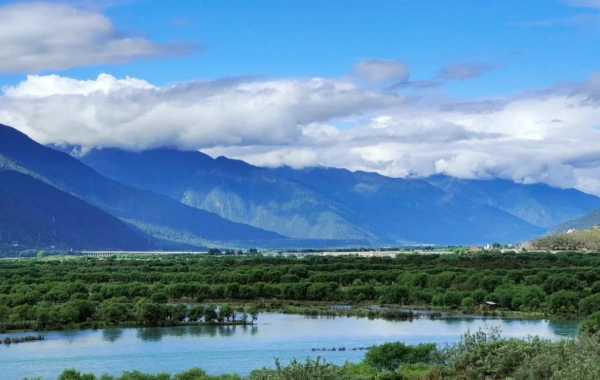
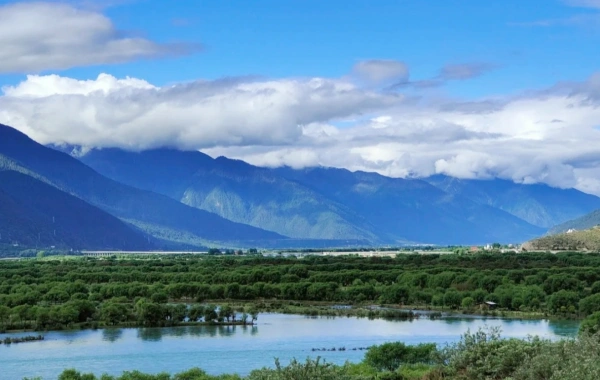
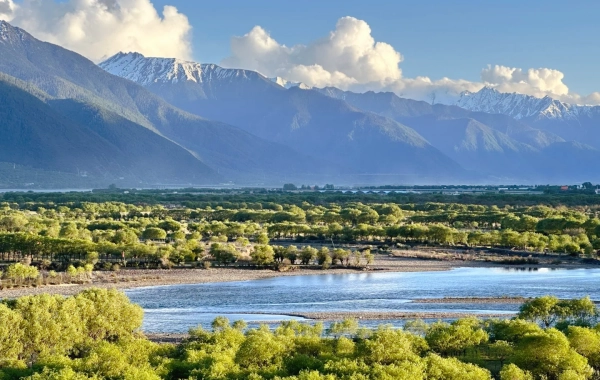
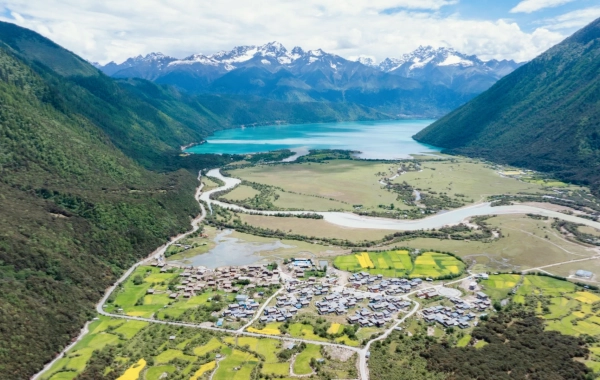
Arrive at Linzhi Milin Airport, pick up and go to [Yani Wetland Scenic Area] The Yani Wetland Scenic Area (formerly the Benri Sacred Mountain Scenic Area) spans Linzhi and Milin counties. It has a pleasant climate, moderate temperature, and mist. It not only has the blue sky, white clouds and snow-capped mountains commonly seen in Tibet, but also the green trees in the south of the Yangtze River. The Yani Wetland was formed by the confluence of the Yarlung Zangbo River and the Niyang River. The nearby wetlands and waterways alternate, and the scenery is beautiful.
The first glass plank road in Tibet. Standing on the glass plank road, you can see the Yani Wetland Scenic Area hidden in the deep boudoir of the plateau, which is transformed into a magnificent and beautiful picture! This curve is winding and tortuous, and the endless plateau wetland is as beautiful as a picture scroll!
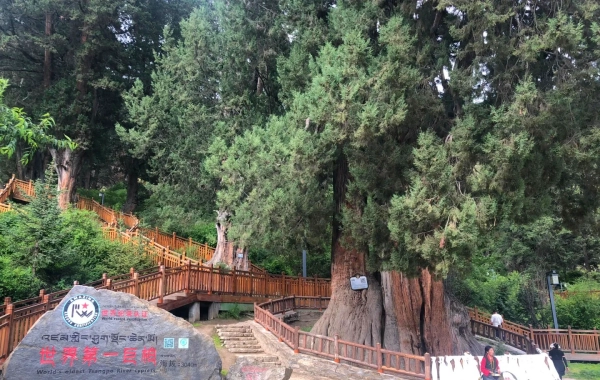
Visit the [World Cypress King Garden] to learn about the growth environment and ecological value of cypress trees. It has been calculated that this giant cypress is 2000-2500 years old and is protected by the locals as a “sacred tree”.
Then go to Yishe Manor to enjoy the tranquility and beauty of the manor, and go to the hotel to check in at night
Day 2: Nyingchi - Bomi
Sejila Mountain–Lulang Forest Sea–Zhaxigang Folk Village–Tongmai–Guxiang Lake
4+ Star Hotel
Breakfast
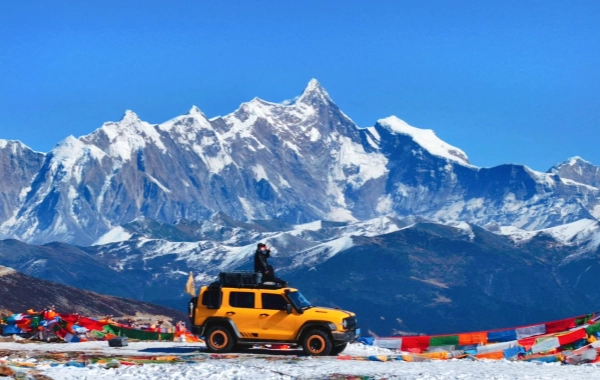
After breakfast, head to Sela Mountain, which serves as the boundary between the eastern and central-western parts of Nyingchi County in Tibet. It acts as the watershed between the Nyang River Basin and the Parlung Zangbo River and is crossed by the southern route of the Sichuan-Tibet Highway. Here, you can enjoy breathtaking views of the sunrise, sea of clouds, endless forested mountains, and the majestic sight of Mount Namcha Barwa in the distance.
Mount Namcha Barwa, located at the intersection of the Himalayas, Nyenchen Tanglha Mountains, and Hengduan Mountains, is the highest peak in Nyingchi, Tibet Autonomous Region, standing at 7,782 meters above sea level. As the easternmost peak of the Himalayas, it is revered as a sacred site of the ancient Tibetan Bon religion and is known as the “Father of Tibet’s Mountains.”
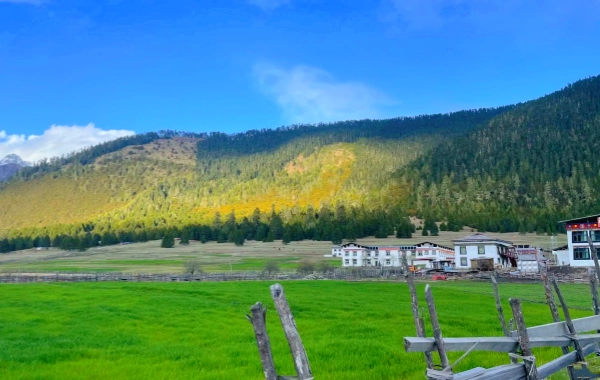
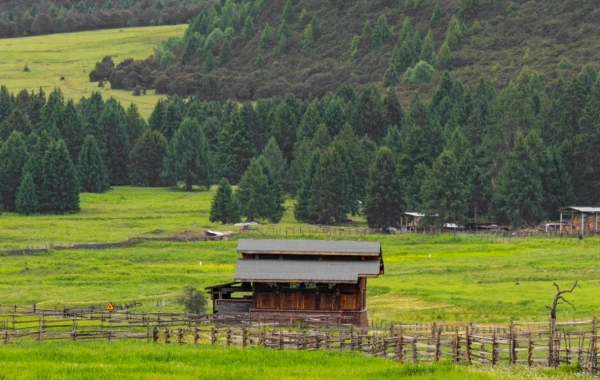
Next, proceed to Lulang Forest Sea, one of China’s three largest primeval forests and a place so enchanting that it makes you never want to leave. Located about 80 kilometers from Bayi Town in Nyingchi along the Sichuan-Tibet Highway, Lulang Forest Sea is a typical highland meadow nestled between mountains. The slopes are covered with shrubs and dense forests of spruce and pine, while the meadows are neatly lined with winding streams and a vibrant display of wildflowers. Scattered throughout are wooden fences, plank houses, and pastoral villages, with mist drifting through the mountains. The snow-capped peaks, forested hills, and pastoral scenery create a serene and picturesque “mountain dwelling” landscape.
Visit Zhaxigang Folk Village to learn about the local Tibetan culture and customs.
Then, traverse the challenging Tongmai Tianxian (Tongmai Danger Zone) and arrive at Guxiang Lake, a freshwater barrier lake. The lake features a small island covering over 1,000 square meters and is conveniently located along National Highway 318, making it a natural park. The lake was formed in 1953 when a massive debris flow, triggered by the activity of the “Xionglu Geini” glacier on the mountain behind Guxiang, blocked the Parlung Zangbo River.
In the evening, arrive in Bomi and check in to your hotel for the night.
Day 3: Bomi
Miduo Glacier–Ranwu Lake
4+ Star Hotel
Breakfast
After breakfast, we depart by vehicle to the Midui Glacier, where we can admire the grandeur and uniqueness of this natural wonder. The Midui Glacier is conveniently located near the Sichuan-Tibet Highway, making it easily accessible. It is a typical representative of the maritime glaciers in the southeastern part of Tibet. The glacier is known for its complete range of types and well-developed, beautiful arcuate structures, which are rare natural spectacles. Here, glaciers, lakes, farmlands, villages, and forests blend harmoniously together, serving as an exemplary model of coexistence between humans and nature.
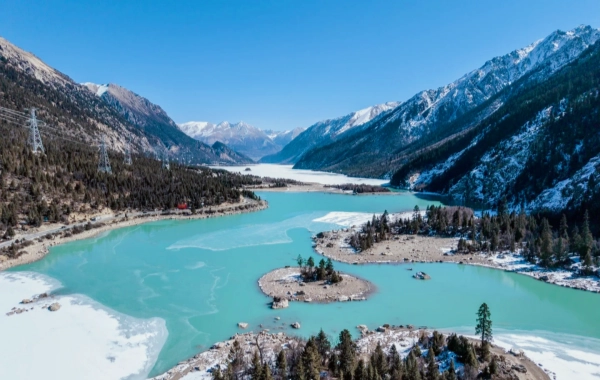
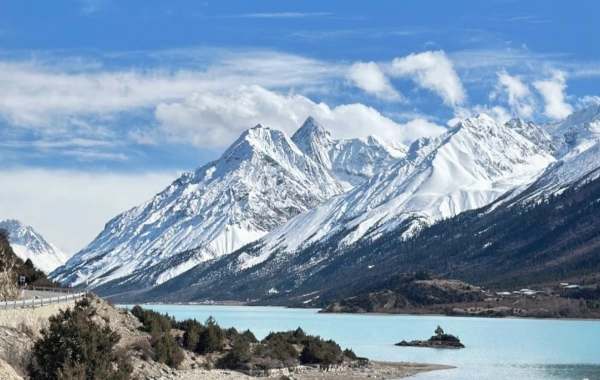
Next, we head to Lake Ranwu, located in Ranwu Township, Baxoi County, Changdu City, Tibet Autonomous Region. Situated at the collision point of the Himalayas, Nyenchen Tanglha Mountains, and the Hengduan Mountains, Lake Ranwu is the largest lake in eastern Tibet, with an elevation of 3,850 meters and an area of 22 square kilometers. The surrounding area is characterized by towering and steep mountains, with many peaks above 5,000 meters hosting developed glaciers.
In the afternoon, we return to Bomi and check into a hotel for the night.
Day 4: Bomi--Basongcuo
Galang Lake–Lulang International Tourism Town–Visiting Tibetans–Basongcuo–Cuozong Temple
4+ Star Hotel
Breakfast
After breakfast, we head to Galang Lake to enjoy the tranquil beauty of its lakeside scenery. From there, we proceed to the Lulang International Tourism Town, where we can savor authentic Tibetan cuisine and experience the unique charm of the town.
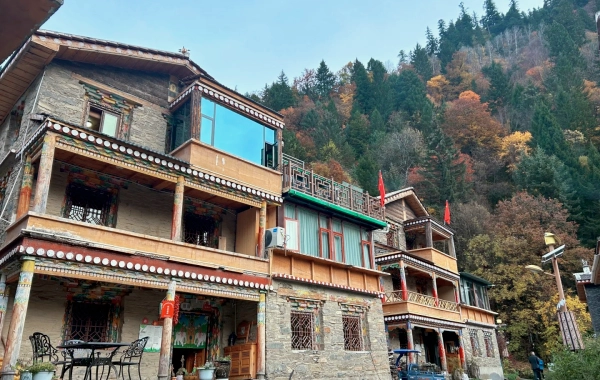
We then visit the Tibetan Folk Village. Nestled against the mountains, the village is a picturesque display of traditional Tibetan architecture. As you walk through it, you’ll feel as if you’ve stepped into a piece of the sky. The village features a variety of Tibetan-style buildings, scattered across the mountainside, offering a glimpse into the most authentic rural landscapes. Winding mountain paths connect different areas of the village, where you can witness Tibetan folk performances, Lhoba and Gongbu dwellings, and traditional handicraft workshops, all presented in a single visit.
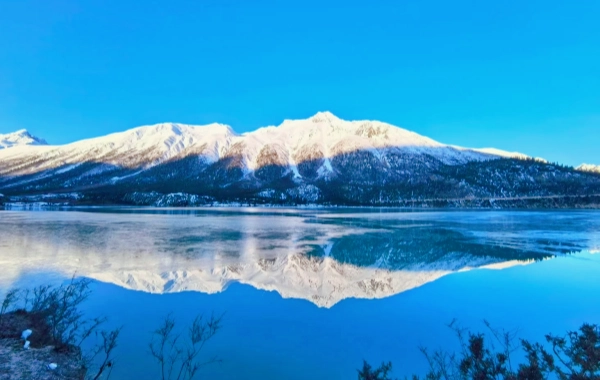
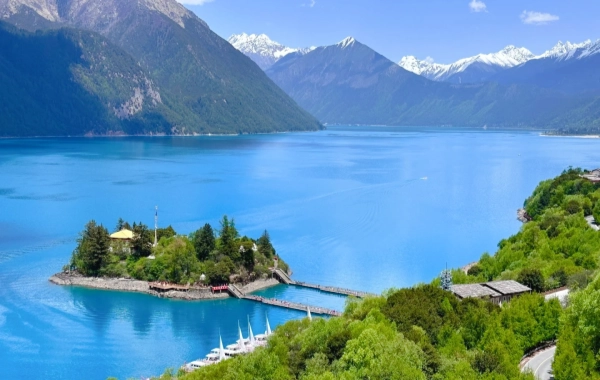
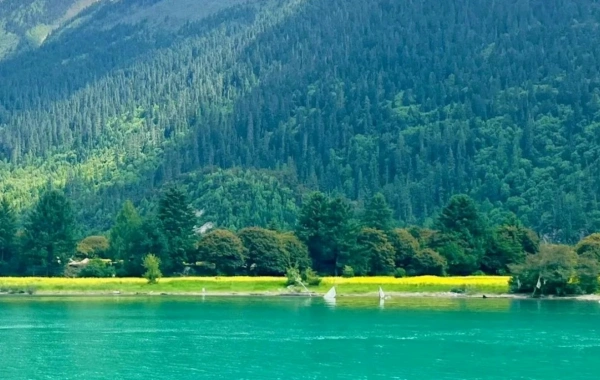
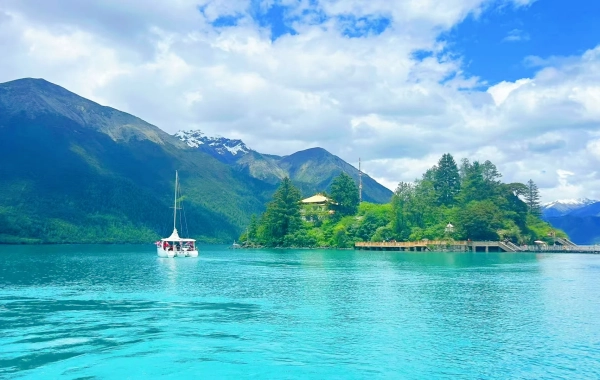
In the afternoon, we explore Bashungcuo, the only natural scenic area in Tibet with a 5A rating, often described as a serene paradise forgotten by time. Also known as Cuogao Lake, Bashungcuo is renowned for its crystal-clear waters, with surrounding snow-capped mountains reflected beautifully on the surface. Seagulls and white cranes glide across the lake, and the transparent waters reveal schools of fish swimming below, creating a delightful scene. In spring, the lake is surrounded by blooming flowers, with snow-capped peaks lining the horizon and reflecting in the water, making for an incredibly picturesque view.
About 100 meters from the shore lies a small island called Zaxi Island. According to legend, this island is “hollow,” meaning it is not connected to the lakebed but rather floats on the water. On the island stands the ancient “Cuozong Gongba Monastery,” a famous Nyingma (Red Sect) monastery in Tibet. Built in the late Tang Dynasty, the monastery has a history of over 1,500 years. The monastery is a two-story earthen and wooden structure, with the main hall housing statues of Padmasambhava (Guru Rinpoche), the Thousand-Armed Guanyin, and the Golden Boy and Jade Girl. To the south of the monastery, there is a unique tree where a peach tree and a pine tree grow together. In spring, the pink peach blossoms contrast beautifully with the green pines, creating a stunning sight.
In the evening, we check into a hotel or guesthouse within the Bashungcuo scenic area to enjoy a peaceful night by the lake.
Day 5: Bacuosong--Lhasa
Basongcuo in-depth tour – cruise to the “Island in the Lake” &”Child-Seeking Cave” – hike to the “Cuogao Village”
4+ Star Hotel
Breakfast
After breakfast, we embark on an in-depth tour of Bashungcuo. We board a cruise ship at the lake’s central island pier, heading to the “Fertility Cave,” which is said to have been blessed by Guru Padmasambhava. Visitors are encouraged to bring a small stone, tap it gently three times inside the cave, and offer silent prayers for blessings. This ritual is believed to be particularly effective for those seeking fertility. Nearby is the “Disaster-Relief Cave,” where Padmasambhava is said to have meditated for three years. This site is a rare and sacred place for spiritual practice, surrounded by prayer flags and khata scarves. Along the way, we pass by the Sanglong Bridge and Sanglong River. In spring, the fertile grasslands by the river provide ample grazing for cattle and offer picturesque spots for hanging prayer flags and stacking mani stones as a form of heartfelt prayer. We also enjoy the stunning views of the lake, mountains, and primeval forests.
We then arrive at Cuogao Village, where we can visit the romantic Lovers’ White Sand Beach.
After our meal, we gather at the entrance of the scenic area to board our vehicle and head to Lhasa, enjoying the breathtaking plateau scenery along the way. Upon arrival in Lhasa, we check into our hotel for some rest.
In the evening, you are free to explore the city of Lhasa at your leisure and immerse yourself in the rich Tibetan cultural atmosphere.
Day 6: Lhasa
Potala Palace–Jokhang Temple–Barkhor Street
4+ Star Hotel
Breakfast
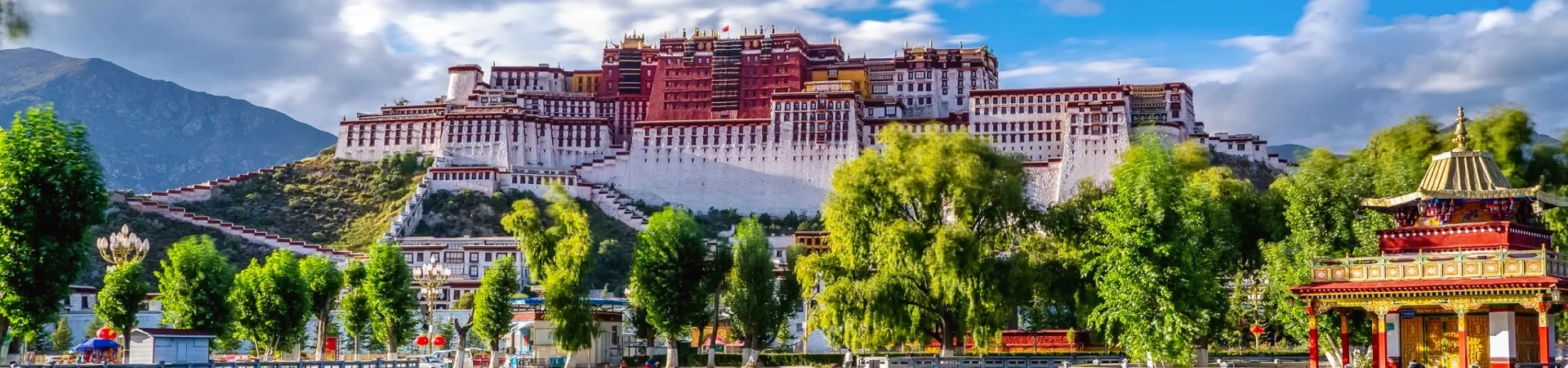
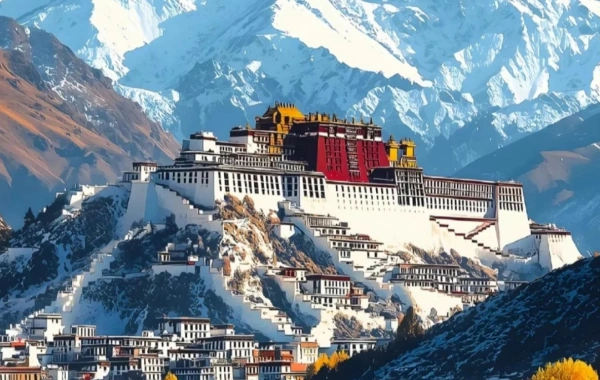
Potala Palace: The Potala Palace (please note that the visiting time is subject to the ticket allocation by our agency; follow the guide’s instructions) is the world’s highest ancient palace complex in terms of altitude. Construction began in the 7th century, and it stands 13 stories high with a total height of about 119 meters. Since the 5th Dalai Lama, it has served as the political and religious center of Tibet. The palace is mainly divided into the White Palace (the residence of the Dalai Lamas) and the Red Palace (housing the stupas of the Dalai Lamas and various Buddhist temples). The Potala Palace contains the golden stupas of the Dalai Lamas and a vast collection of precious murals and thangkas, making it a quintessential representation of Tibetan culture. After the tour, you will walk down the hill and return to the base of the Potala Palace. The Zongjiao Lukang Park is a must-pass location after descending from the palace, where you can experience the daily life of local Tibetans. The Dragon King Lake, Potala Palace Square, Tibet Peace Liberation Monument, white pagoda, and the Yowang Mountain Viewpoint (which is just opposite the Potala Palace) are all excellent spots for photographing the palace (the location featured on the back of the 50-yuan Chinese banknote). The mid-slope area is especially popular among photography enthusiasts who gather to capture the moment when the first rays of light illuminate the Potala Palace.
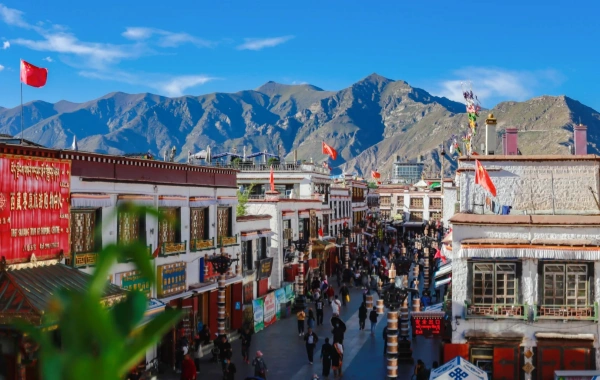
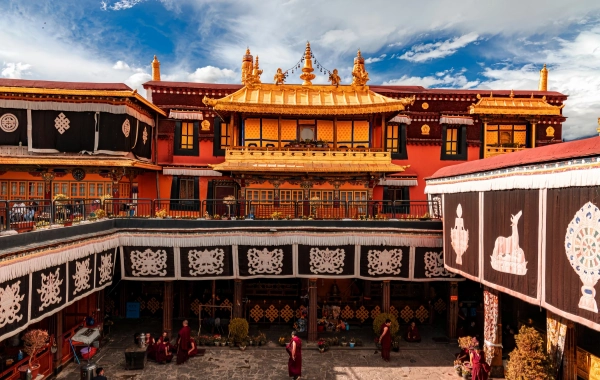
Jokhang Temple: In Tibetan Buddhism, the Jokhang Temple holds the highest and most revered status. It is the most magnificent surviving building from the Tubo period and the earliest wooden structure in Tibet. The temple also established the architectural layout of the Tibetan flatland-style monasteries. The innermost circuit around the central Sakyamuni Buddha Hall inside the temple is called the “Nangkhor,” the outer circuit around the temple’s outer wall is known as the “Barkhor,” and the streets radiating from the temple are collectively referred to as “Barkhor Street” or “Eight-Cornered Street.” The larger circuit that includes the Jokhang Temple, Potala Palace, Yowang Mountain, and Ramoche Temple is called the “Lingkhor.” These three concentric circuits represent the pilgrimage routes for Tibetan Buddhists.
Barkhor Street: In Tibetan, “Barkhor” means “the middle circuit.” Also known as the Eight-Cornered Street, Barkhor Street is located in the urban district of Lhasa and serves as a famous pilgrimage route and commercial center in the city. It has preserved the traditional appearance and living style of the ancient city. Originally, the street was solely a pilgrimage route around the Jokhang Temple, referred to by Tibetans as the “Sacred Road.”
Day 7: Lhasa
Namtso One-day Tour
4+ Star+ Hotel
Breakfast
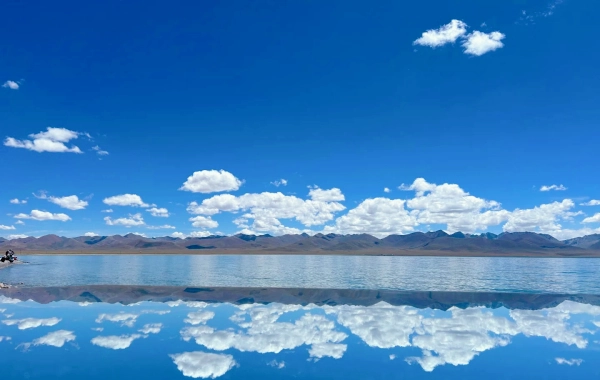
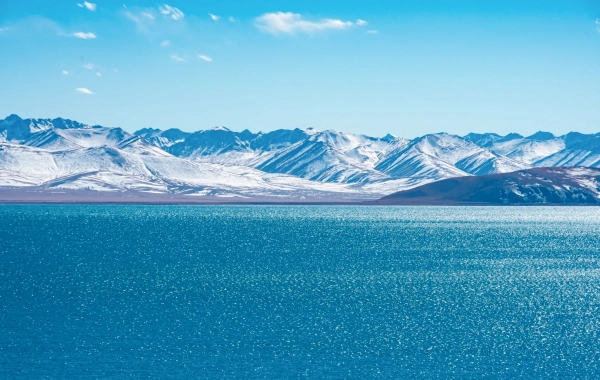
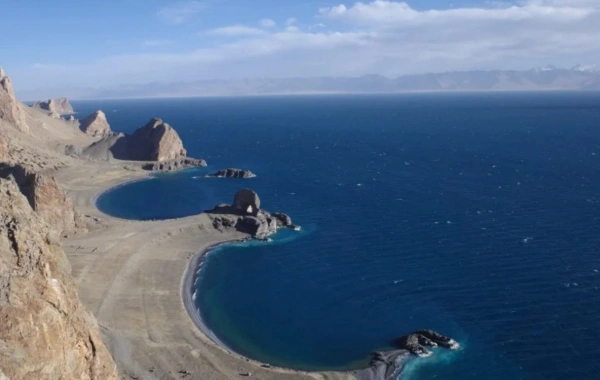
After breakfast, we head to Lake Namtso. Known as “Tenggeri Nur” (or “Tenggeri Sea”) in Mongolian and “Nam Co Pu Mo” in Tibetan, which translates to “Heavenly Lake of Wealth” (or simply “Heavenly Lake,” “Spiritual Lake,” or “Sacred Lake”), both names convey the meaning of “Heavenly Lake.” Lake Namtso is one of the “Three Sacred Lakes” in Tibet and was originally the foremost sacred lake of the ancient Zhangzhung Bon religion. Later, it became one of the renowned Buddhist pilgrimage sites. During the Tibetan Year of the Sheep, thousands of devotees flock here for pilgrimage.
Namtso is also a lake for divining fortunes and misfortunes. It is said that those with “strong fate” who climb the hills beside the lake can witness miraculous phenomena within its waters. Thus, it has historically been a site for Tibetan Buddhists to conduct divination ceremonies. Every summer, many lamas visit to seek blessings and divine the future through the lake’s mystical visions.
The surrounding mountains appear and disappear in the mist. As the sun rises, the clouds dissipate, and a gentle breeze blows, ripples form on the vast and boundless lake surface. It feels like a benevolent fairy waving a white scarf, watching over the visitors. At this moment, the main peak of the Nyenchen Tanglha Mountains is especially clear, with the pastures a light green, the mountain body interspersed with red and black, and the summit covered in snow. The main peak stands like a mighty warrior guarding Lake Namtso. The plateau’s weather changes rapidly, with sudden strong winds, dark clouds, and snowstorms. Yet, after the storm, the lake remains shimmering and enchanting.
Along the way, we catch glimpses of the sacred protector of Lake Namtso, the Nyenchen Tanglha Peak, which stands at an elevation of 7,117 meters. We also enjoy the beautiful scenery of the northern Tibetan grasslands before boarding our vehicle to return to Lhasa.
Day 8: Lhasa
Yamdrok Yumtso–Thangka Cultural Center–Craft Museum
4+ Star Hotel
Breakfast
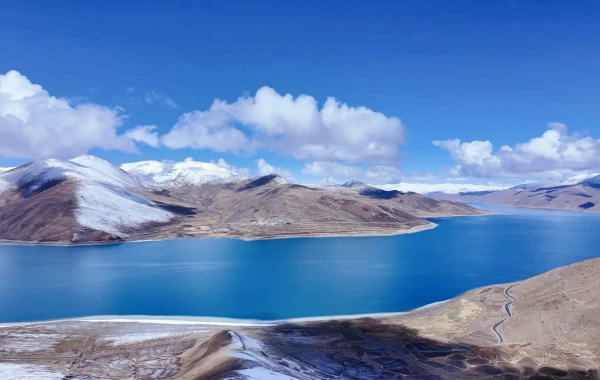
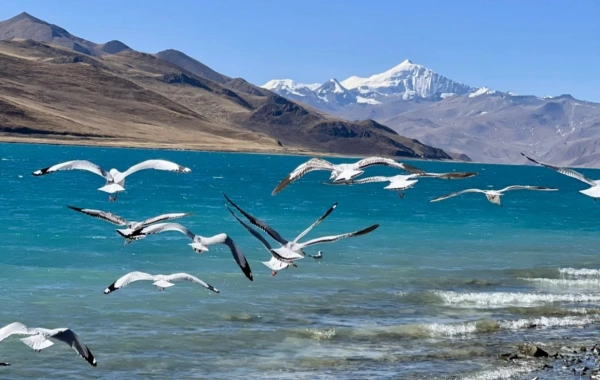
Yamdrok Lake is located in Gangdsei Town, Gonggar County, Shannan Prefecture, Tibet Autonomous Region, with an elevation of 3,598 meters. It is about 10 kilometers west of the county seat. In Tibetan, it means “the turquoise in the upper pasture,” commonly referred to as “Yamdrok Lake.” Yamdrok Lake is the largest inland lake group in southern Tibet, covering an area of 638 square kilometers. The lake is also believed to be a string of turquoise earrings left by a goddess on earth. Standing on the Gangba La Mountain Pass at an altitude of 4,950 meters and looking southward, Yamdrok Lake resembles a sapphire set among the peaks. The azure lake water is smooth as a mirror, reflecting the sky in a striking blue. The interplay of lake and mountain scenery is enhanced by the occasional birds gliding across the, surface creating a picturesque scene.
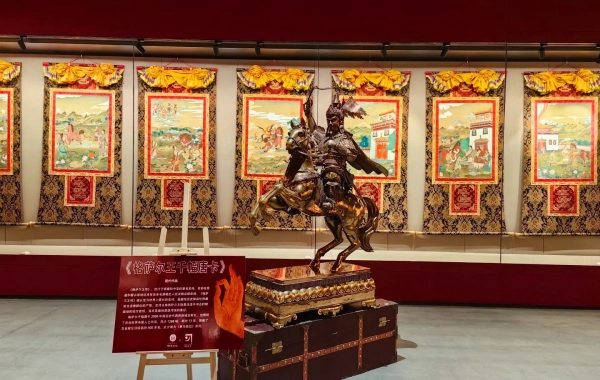
Thangka Culture Museum: Here, you can gain an in-depth understanding of the historical background, cultural significance, and craftsmanship of thangkas. Thangkas are traditional Tibetan Buddhist scroll paintings that combine religious and artistic elements, often depicting deities, mandalas, and scenes from Buddhist history.
Craft Museum: This museum offers a vivid experience of Tibetan aesthetics and provides an opportunity to explore and appreciate the unique charm of Tibetan traditional culture. It showcases the intricate craftsmanship and artistic beauty of Tibetan artifacts, giving visitors a deeper insight into the region’s rich cultural heritage.
Day 9: Lhasa Departure
Lhasa depature
None
Breakfast
Today marks our final pilgrimage in the sacred city of Lhasa. As we slowly make our way along the Lhasa River Valley and look back, the Potala Palace seems to gaze at us with reluctance, as if bidding us farewell. Farewell, my beloved Potala! Farewell, my cherished snowy land bathed in sunshine!